
Dale Whitfield runs maintenance for a mid-size auto parts plant outside Toledo, Ohio. Eleven years on the floor. He can tell you, just by sound, when a conveyor motor is two weeks from dying. Last March he was wrong. The motor seized on a Tuesday morning, took the line down for six hours, and cost the plant about $48,000 in missed shipments. Dale’s ear is good. It’s just not good enough anymore. Not at the scale his plant runs at in 2026.
That’s the story behind almost every conversation we have with operations leaders right now. Not the vendor pitch version. The real one — a guy who’s done this for over a decade getting outpaced by equipment that’s gotten more complex, faster, and less forgiving of guesswork. IoT predictive maintenance 2026 isn’t a buzzword chasing budget. It’s the thing that would’ve caught Dale’s motor before it cost him six figures a year in unplanned downtime.
This guide walks through what predictive maintenance using IoT actually looks like on a working floor — not in a sales deck — and where it’s headed across U.S. manufacturing, energy, and logistics through the rest of this year.
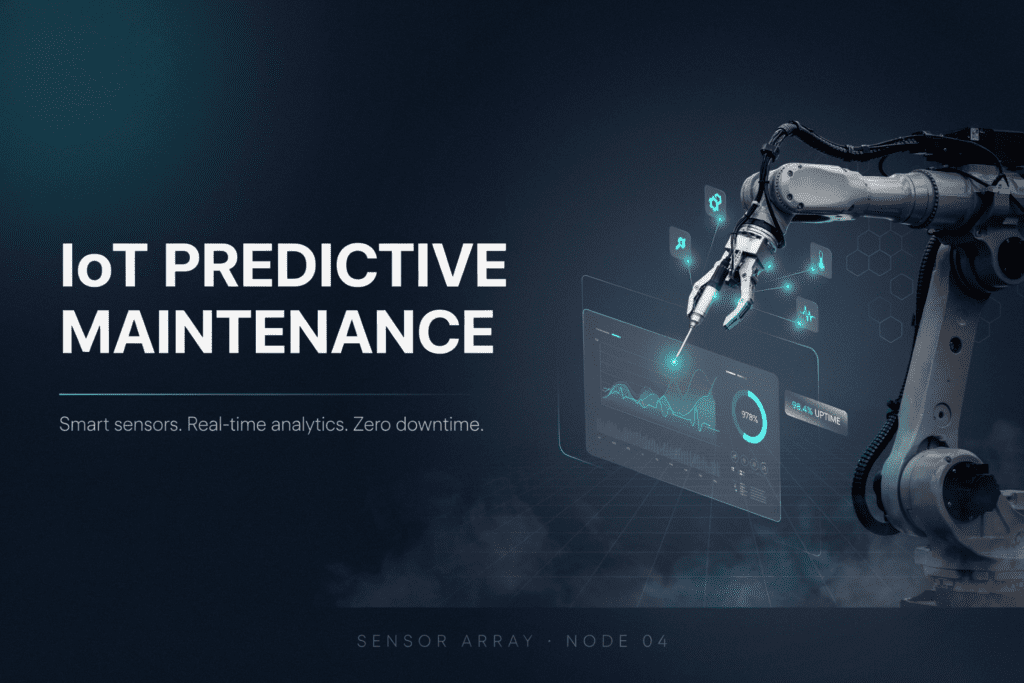
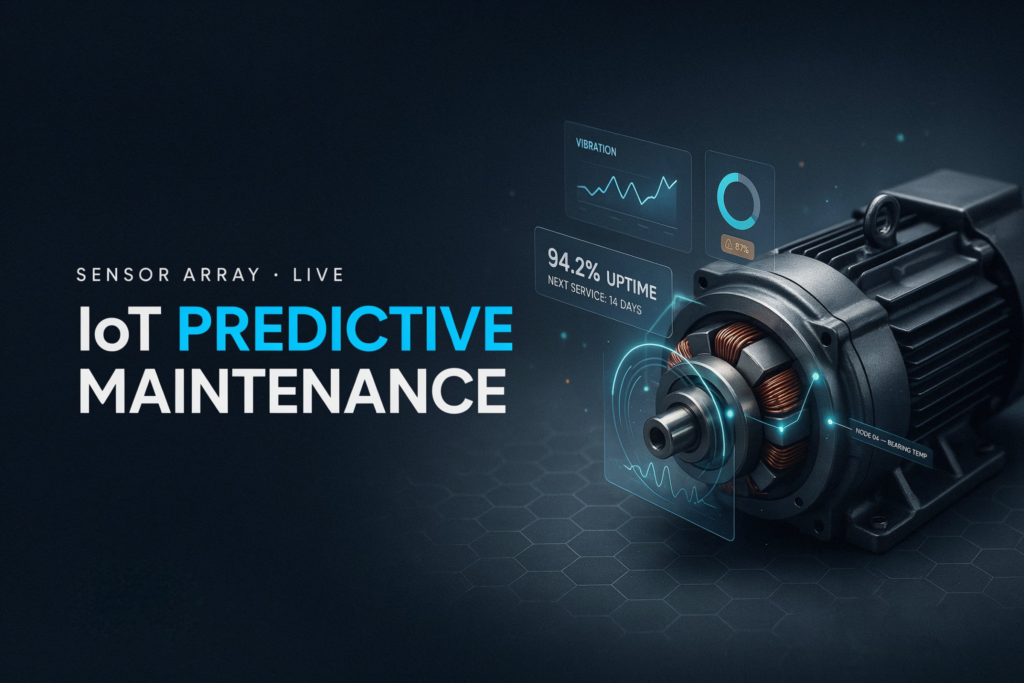
Strip away the jargon and predictive maintenance IoT comes down to one idea: machines tell you they’re breaking before they actually break. Sensors sit on the equipment — motors, pumps, compressors, conveyor belts — and stream data constantly. Vibration. Heat. Pressure. Sound. That data flows into software that learns what “normal” looks like for that specific machine, and the moment something drifts from normal, somebody gets a warning.
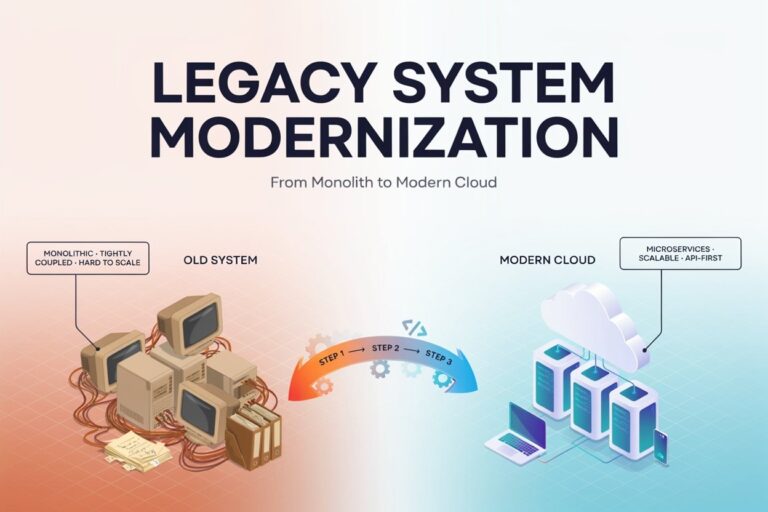
Compare that to how most American plants ran maintenance for the last fifty years. Two flavors. Reactive — wait for it to break, then scramble. Or preventive — change the part every 90 days whether it needs it or not, because the manual said so. Both waste money. Reactive maintenance burns cash on emergency repairs and lost production. Preventive maintenance throws away perfectly good parts on a calendar schedule that has nothing to do with how the equipment is actually performing.
IoT condition-based maintenance splits the difference and beats both. You service the equipment when the data says it needs servicing. Not before. Not after. A bearing that’s good for 14 more months doesn’t get replaced in month nine just because that’s what the schedule says.
None of this works without the right hardware feeding the system clean data. IoT sensors for predictive maintenance generally fall into a handful of categories, and most serious deployments use several at once.
Vibration analysis sensors pick up the earliest warning signs on rotating equipment — motors, fans, pumps, gearboxes. A bearing starting to fail vibrates differently weeks, sometimes months, before it fails outright. Catch that shift early and you’re scheduling a repair on your terms instead of an emergency callout at 2 a.m.
Temperature monitoring sensors IoT setups rely on watch for heat buildup that signals friction, electrical faults, or lubrication failure. A transformer running three degrees hotter than its baseline doesn’t sound dramatic. It’s often the first sign of insulation breakdown.
Acoustic sensors, pressure transducers, and current sensors round out the picture for most industrial setups, feeding into the same pipeline that vibration and temperature data flows through.
This is where sensor-based predictive maintenance earns its keep — not from any single sensor, but from correlating signals across all of them at once. A vibration spike paired with a temperature rise tells a very different story than either reading alone.
Sensors collect the data. AI is what makes the data useful. AI and IoT predictive maintenance work together because raw sensor readings, on their own, are just noise to a human reading a dashboard. Machine learning fault detection models get trained on historical failure patterns — what the vibration signature looked like in the weeks before twenty different bearing failures, for instance — and then they watch live data for that same fingerprint.
Anomaly detection in machines is the piece that matters most for catching problems nobody’s seen before. You can’t write a rule for every possible failure mode on a piece of industrial equipment with 400 components. But you can teach a model what “normal operation” looks like across thousands of hours of data, and flag anything that deviates. That’s the real value of predictive analytics in manufacturing — it doesn’t need a human to have already imagined the failure.
Failure prediction algorithms have gotten considerably more accurate over the past two years, partly because there’s simply more training data available now across more equipment types, and partly because edge hardware can run heavier models than it used to.
This isn’t theoretical for the industries actually deploying it. Industrial IoT predictive maintenance has found its footing in a handful of sectors where unplanned downtime is brutally expensive.
Manufacturing leads, no surprise there. Manufacturing IoT maintenance tools are standard equipment now in plants across Michigan’s auto corridor, the furniture manufacturing belt in North Carolina, and the food processing operations scattered through the Midwest.
Energy and utilities are close behind. Wind farms across West Texas use vibration and temperature sensors on turbine gearboxes because a technician climbing 300 feet to do a manual inspection is expensive and dangerous, and a failed gearbox can take a turbine offline for weeks waiting on replacement parts.
Logistics and warehousing in places like Georgia and Tennessee — both major freight corridors — lean on real-time equipment monitoring systems for conveyor systems and automated sorting equipment, where one jammed belt can back up an entire distribution center.
Oil and gas operations in Oklahoma and Louisiana run remote equipment diagnostics on pumps and compressors sitting in locations that are genuinely difficult and costly to staff around the clock.
Smart factory predictive maintenance is one piece of a bigger shift happening across U.S. manufacturing right now. Industry 4.0 connects machines, sensors, and software into a single operational picture, and maintenance is usually where companies start because the ROI is the most obvious to prove out.
Industrial automation maintenance programs built on IoT don’t just catch failures. They feed data back into production planning. If a press is running 12% slower than its baseline because of a developing mechanical issue, that’s useful information for the scheduler deciding what runs through that line next week — not just for the maintenance technician deciding when to fix it.
Smart sensors for industry 4.0 are increasingly built with onboard processing, which leads directly into one of the bigger shifts in how this technology gets deployed.
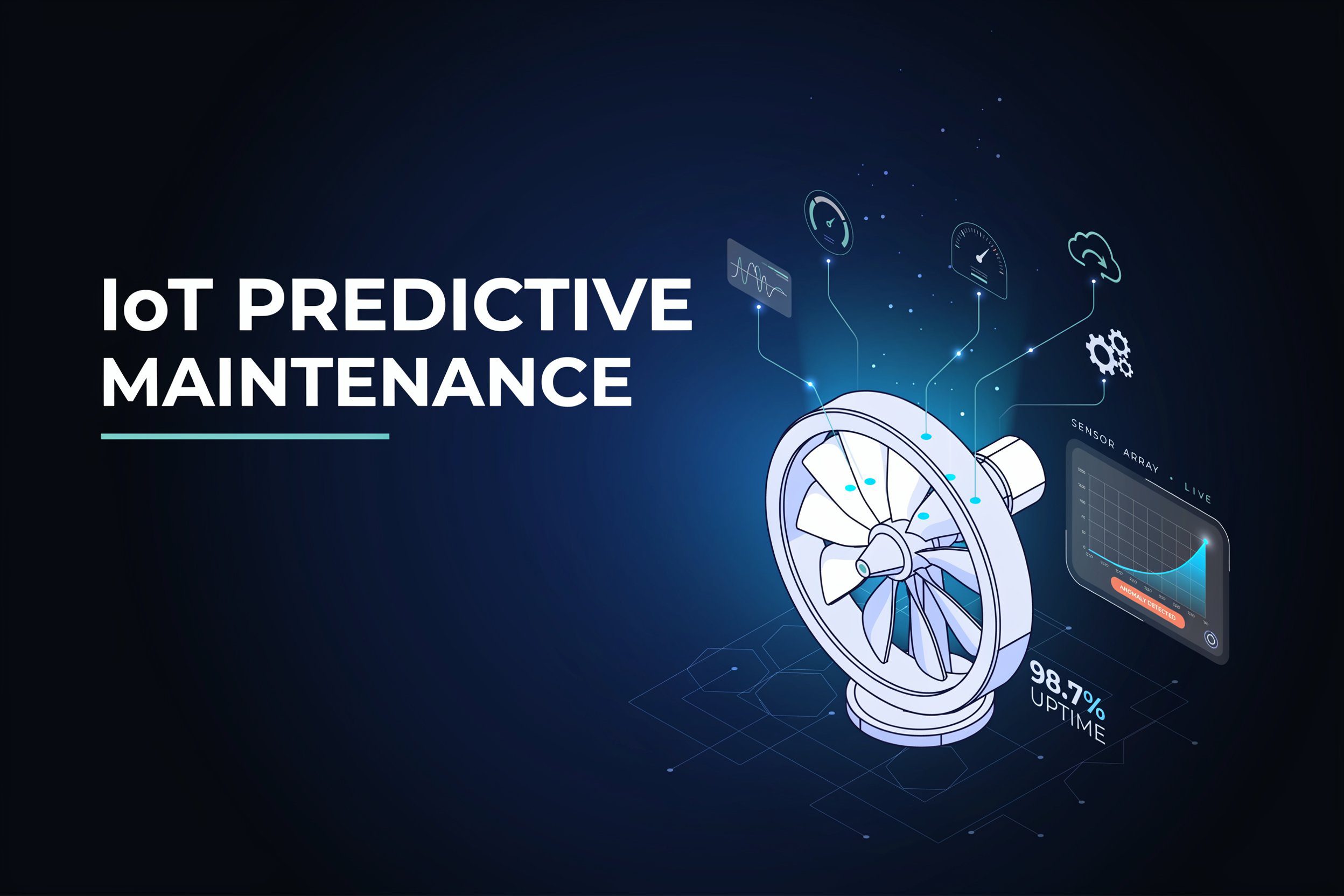
Edge computing in predictive maintenance solves a problem that cloud-only systems ran into hard: latency and bandwidth. Sending every vibration reading from every sensor on a factory floor to the cloud, every second, for analysis — that’s expensive, and it’s slow when milliseconds matter.
Real-time data processing IoT systems increasingly run a chunk of the analysis right at the edge, on hardware sitting near the machine itself. The sensor flags an anomaly locally, in real time, and only sends the relevant alerts and summary data up to the cloud platform. That cuts bandwidth costs and means a plant in a rural part of Iowa with patchy internet isn’t dead in the water if the connection drops for ten minutes.
Cloud-based predictive maintenance platforms still matter enormously — that’s where the heavy historical analysis happens, where models get retrained, where a plant manager in Pittsburgh can see dashboards for facilities in three different states from one screen. Edge and cloud aren’t competing approaches anymore. Most serious 2026 deployments run both, with edge handling the speed-critical work and cloud handling the depth.
Digital twin predictive maintenance takes the concept further by building a live virtual replica of a physical asset — fed continuously by sensor data — that engineers can use to simulate “what happens if we push this machine harder” without actually risking the real equipment.
This connects directly to asset performance management IoT strategies, where companies stop thinking about maintenance machine-by-machine and start managing the performance of their entire equipment fleet as one connected system. Equipment lifecycle management benefits hugely here — you’re not just predicting the next failure, you’re tracking how an asset’s overall health trends across years, which changes how and when you plan capital replacement decisions.
Downtime reduction using IoT is the metric every plant manager actually cares about, more than any of the underlying technology. Unplanned downtime in manufacturing has been estimated to cost companies tens of thousands of dollars per hour depending on the industry and equipment involved — and that’s before counting the secondary costs of missed shipping deadlines, contract penalties, and customer relationships strained by late deliveries.
Equipment failure prediction systems that catch a problem two weeks out instead of two minutes out change the entire cost equation. A scheduled four-hour repair during a planned maintenance window costs a fraction of an emergency twelve-hour shutdown with rush-ordered parts and overtime labor stacked on top.
Operational efficiency industrial IoT gains compound over time, too. Plants running mature predictive maintenance programs report meaningfully fewer unplanned stoppages and longer average equipment lifespans compared to plants still running reactive or purely calendar-based preventive schedules.
IoT preventive maintenance and predictive maintenance get used interchangeably sometimes, and they shouldn’t be. Preventive maintenance is calendar-driven — service the pump every six months, period, regardless of how it’s actually running. Predictive maintenance is condition-driven — service the pump when the data says it’s degrading, which might be four months or might be ten.
The difference matters financially. Preventive schedules tend to over-maintain healthy equipment and occasionally under-maintain equipment that’s degrading faster than the schedule assumes. Predictive maintenance technology IoT systems remove the guesswork entirely by replacing the calendar with actual condition data, equipment by equipment.
Once a facility has real condition data flowing in, maintenance scheduling optimization becomes possible in a way it simply wasn’t before. Instead of technicians working through a fixed list every Monday, software can rank which equipment needs attention the fastest based on actual degradation trends, then route technicians efficiently across a facility or even across multiple sites.
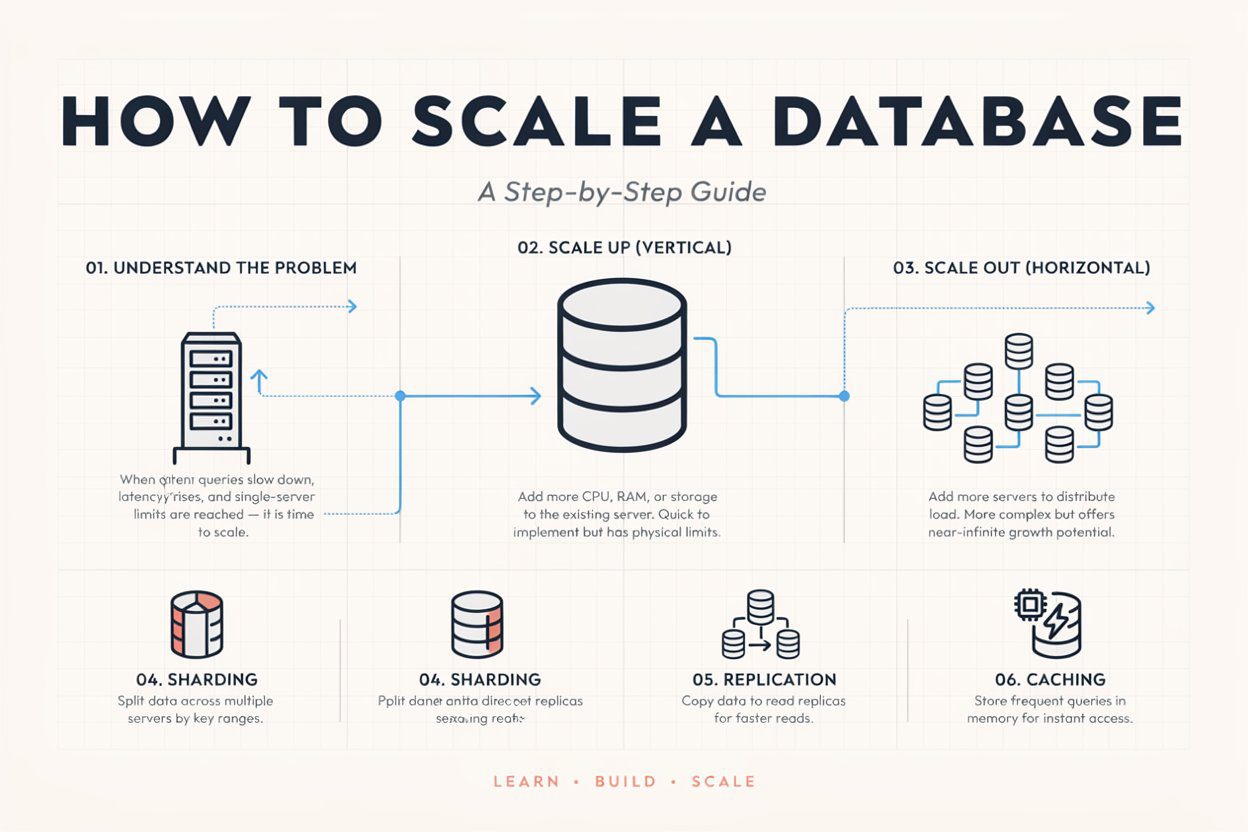
This matters more than it sounds. A maintenance team in a Charlotte, North Carolina distribution hub that used to spend two days a week on routine calendar-based checks across forty machines can redirect that labor toward the six machines actually showing early warning signs — and skip wasted inspections on the other thirty-four entirely.
This is exactly the kind of system we build at Asapp Studio. Our IoT Development team designs industrial IoT (IIoT) maintenance solutions end to end — sensor selection and hardware integration, edge and cloud architecture, and the dashboards that put clear, actionable alerts in front of a maintenance team instead of a wall of raw numbers nobody has time to interpret.
We pair that hardware layer with our Artificial Intelligence services to build the machine health monitoring IoT models that actually learn a specific facility’s equipment behavior, rather than shipping a generic off-the-shelf model and hoping it fits. And because most of these systems need a clean interface that plant managers and technicians actually want to open every morning, our UI/UX Services team builds dashboards designed around how maintenance teams actually work, not how a software engineer assumes they work.
For manufacturers running multiple facilities, our Software Development Services team handles the harder integration work — tying predictive maintenance data into existing ERP and CRM systems so a flagged failure risk doesn’t just sit in a separate app, but actually triggers a parts order or a work ticket automatically.
IoT predictive maintenance applications have spread well past heavy manufacturing. Commercial HVAC systems across office towers in Atlanta and Dallas use the same underlying sensor-and-model approach to predict compressor failures before tenants notice a warm building. Hospital networks across the Midwest apply it to MRI machines and ventilators, where unplanned downtime isn’t just expensive — it directly affects patient care. Data centers in Virginia’s “data center alley” run it on cooling systems and backup generators, because a failed cooling unit in a server hall can cascade into a much bigger outage within minutes.
IoT based predictive maintenance solutions are also showing up in agriculture, where irrigation pumps and grain elevator equipment across farm operations in Nebraska and Kansas get the same vibration and temperature monitoring that a factory floor in Detroit would use.
A few shifts are worth watching. Smaller and mid-size manufacturers — not just the Fortune 500 plants — are adopting predictive maintenance IoT applications now that sensor hardware and cloud platforms have gotten cheaper. Five years ago this was a budget item only large enterprises could justify. That’s no longer true.
Integration is also tightening. Industrial automation maintenance systems are increasingly built to talk directly to ERP and supply chain software, so a predicted bearing failure doesn’t just alert a technician — it automatically checks parts inventory and flags a reorder if stock is low.
And the sensors themselves keep getting smarter, doing more processing on-device before anything gets transmitted, which keeps pushing more of the real-time decision-making out to the edge rather than waiting on a cloud round-trip.

Dale’s plant in Toledo installed a vibration and temperature monitoring system on its critical conveyor motors about four months after that $48,000 failure. The system flagged a bearing issue on a different motor three weeks ago. Routine fix, scheduled on a Saturday, nobody noticed. That’s the whole pitch for IoT predictive maintenance 2026, really. Not flashy. Just the difference between a six-hour emergency and a quiet Saturday morning repair.
If your facility is still running on a maintenance calendar and a good set of ears like Dale’s, it might be worth a conversation. Contact Us to talk through what a predictive maintenance system would actually look like on your floor, with your equipment, in your industry.
Q1. What is IoT predictive maintenance in simple terms?
It uses sensors and AI to monitor equipment condition continuously, flagging failures before they happen instead of waiting for a breakdown.
Q2. How accurate is IoT-based predictive maintenance?
Accuracy depends on sensor quality and model training, but mature systems reliably catch developing failures weeks before they occur.
Q3. Which industries use IoT predictive maintenance the most?
Manufacturing, energy, logistics, oil and gas, and healthcare facilities across the U.S. use it most heavily right now.
Q4. What’s the difference between preventive and predictive maintenance?
Preventive maintenance follows a fixed calendar. Predictive maintenance reacts to real-time equipment condition data instead.
Q5. How do I start implementing IoT predictive maintenance?
Start with critical equipment, add vibration and temperature sensors, then build out AI monitoring and a clear alert dashboard.